VIVERSE for Evolving Ecosystems
As the platform evolved across WebXR, mobile, and immersive environments, directions became increasingly fragmented.
VIVERSE is a platform connecting creation, content, and interaction across ecosystems.
I worked across concept design, system alignment, and platform experience — helping unify fragmented directions within a constantly changing environment.
This work focused on bringing structure to a shifting landscape, enabling scalable and coherent experiences across products, devices, and entry points.
Duration
2023-2025
Platform
XR, WebXR, Web, Mobile
Context
VIVERSE began as an immersive content platform where XR users could explore, purchase, and experience virtual worlds.
Over time, its direction shifted — from device-dependent XR experiences toward a broader WebXR and mobile-first ecosystem focused on accessibility, content creation, and cross-device continuity.
As the platform expanded across consumer experiences, business use cases, and platform services, design decisions made under different assumptions, timelines, and teams began to coexist without a shared system or source of truth. Fragmentation gradually surfaced — not as a single problem, but as an accumulation of short-term decisions made in a fast-moving environment.
Within this evolving landscape, I worked across concept design, system alignment, and platform experience—helping teams navigate fragmentation and build toward a more coherent foundation.
As VIVERSE expanded across XR, WebXR, mobile, and platform services, design decisions were made under shifting assumptions, timelines, and teams. The challenge was no longer designing individual features, but navigating constant change without fragmenting the experience.
The core problem was not a lack of ideas or execution — it was how to make design decisions that could remain valid, even as direction kept changing.
My Role
My involvement in VIVERSE was phase-based and need-driven, rather than continuous ownership.
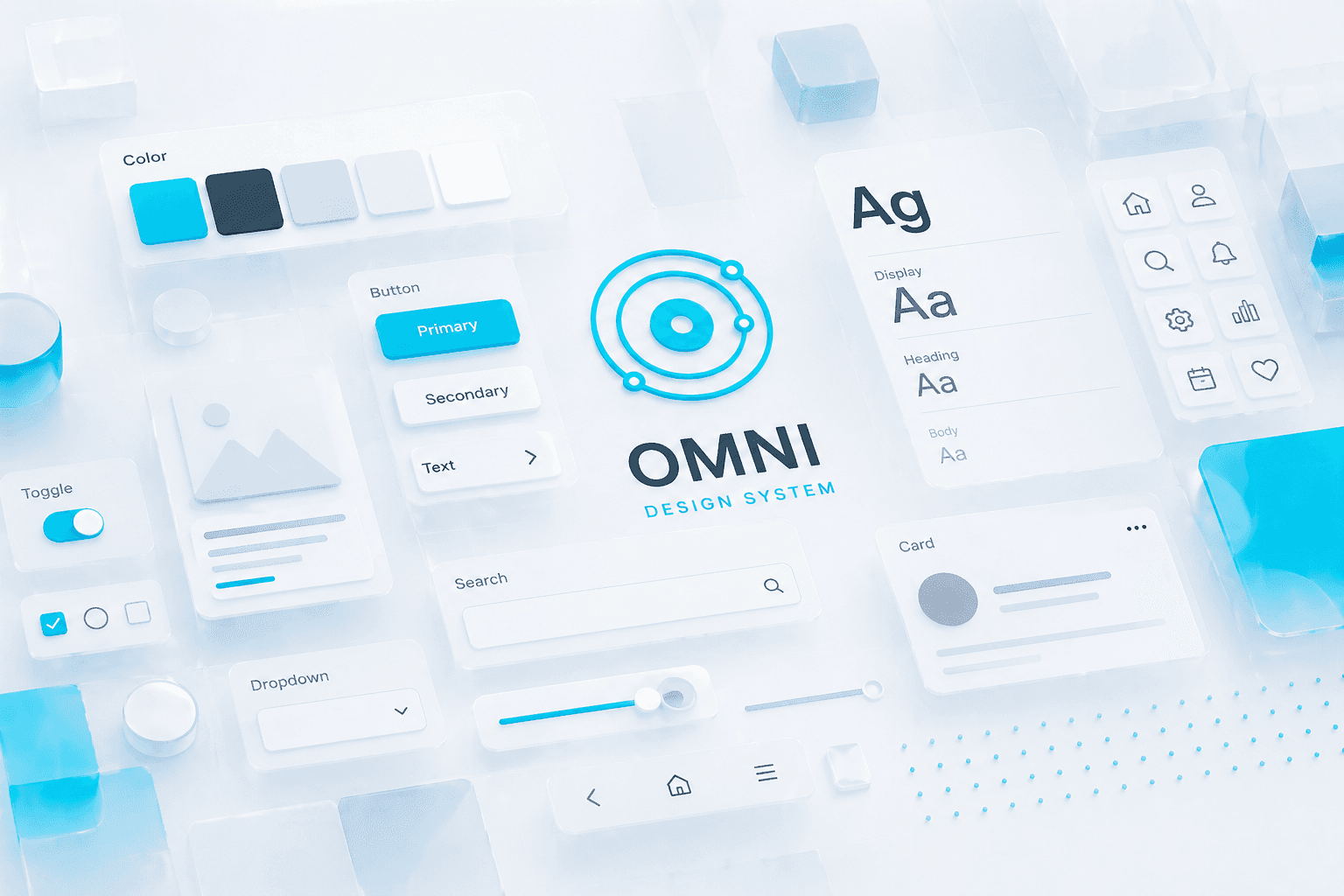
Alongside leading and contributing to other core initiatives such as VRS and the Omni Design System, I was brought into VIVERSE during periods of significant uncertainty — when the platform was shifting in direction, entry points, and experience expectations across XR, WebXR, and mobile contexts.
I led a hands-on UI design team and collaborated closely with partner design teams across regions, focusing on contributing to and shaping experience direction, key interaction and system decisions, and ensuring visual and experiential coherence as the product evolved.
Rather than overseeing VIVERSE end-to-end, I contributed by intervening at critical decision points — helping teams align fragmented efforts, navigate ambiguity, and make design choices that could scale and adapt as the platform continued to transform.
Process
Phase 1 — Portal Transition as a System Choice (XR)
Context / Situation
At the early stage of VIVERSE, the platform was conceived as an immersive XR content marketplace. A key challenge was how users moved between experiences without breaking immersion or context.
What we explored
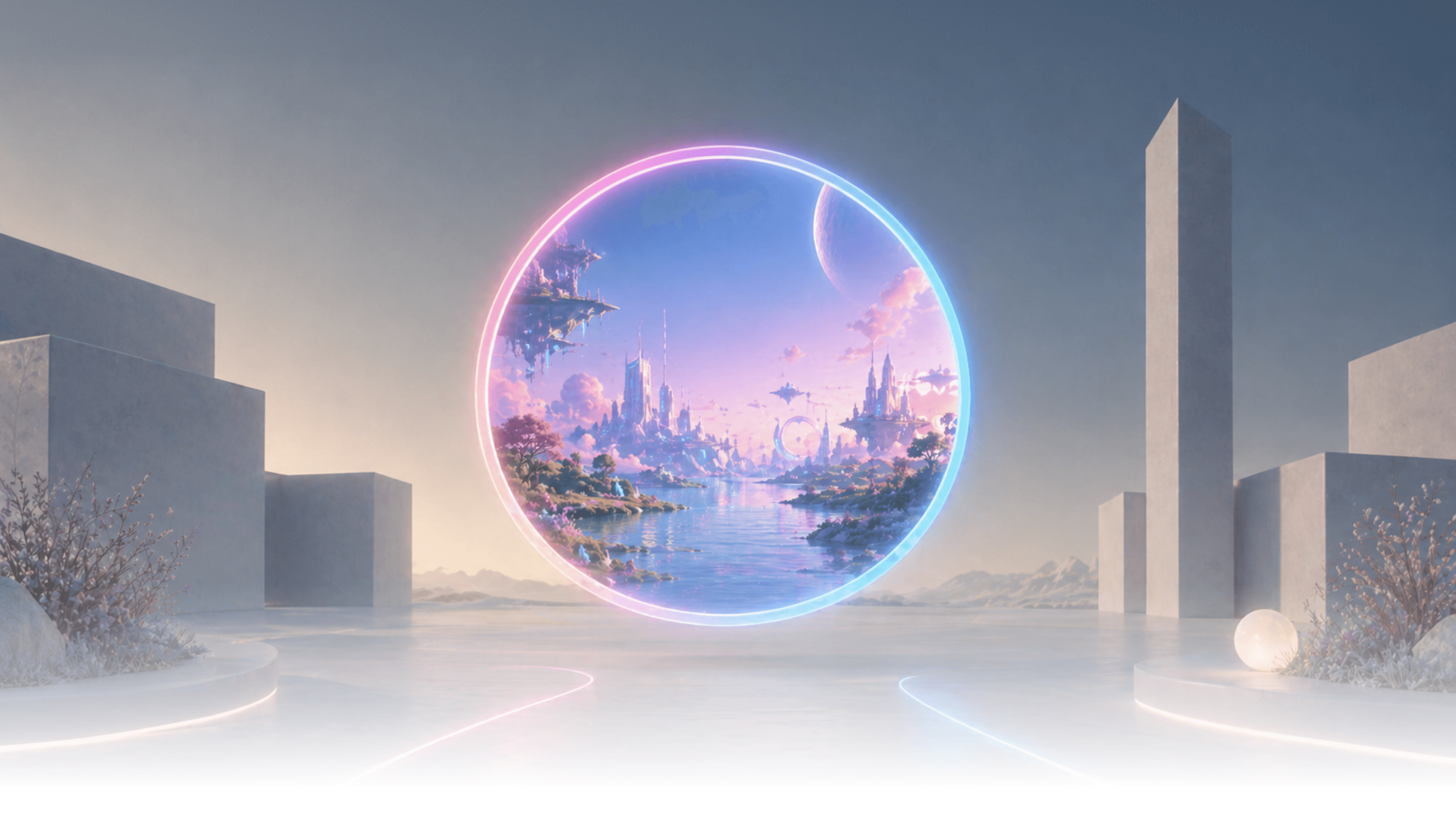
Rather than treating content switching as a system-level interruption, we explored a portal-based transition concept — allowing users to move between XR contents directly inside the virtual world.
This concept was designed not as a one-off visual moment, but as a system-level transition pattern that could scale across different types of content and environments. The portal metaphor helped users understand “where they were going” spatially, while preserving presence and continuity.
Decision focus
Preserve immersion by embedding system transitions inside the virtual world, rather than pulling users out into menus or flat system layers.
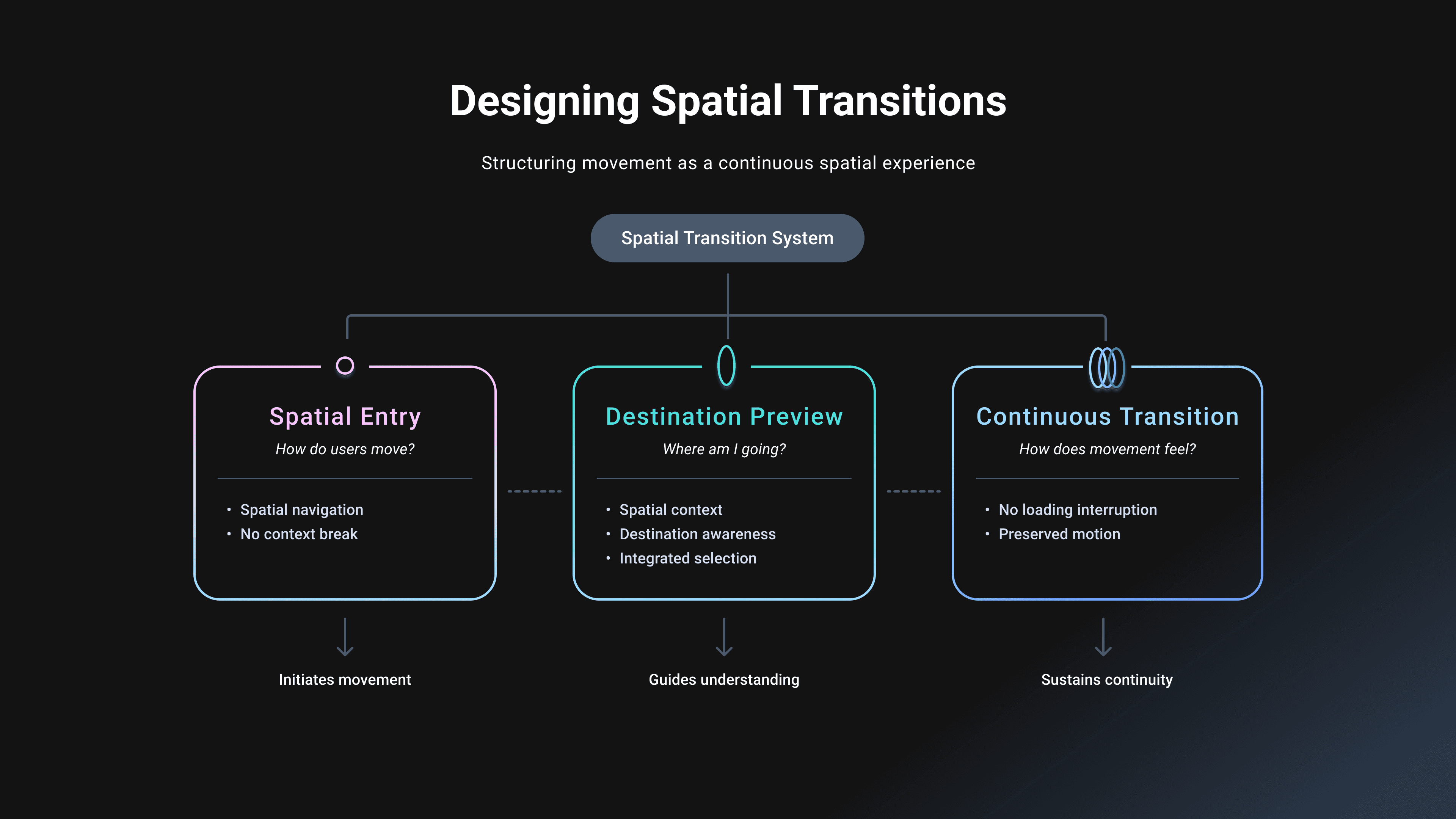
Spatial Transition Model — integrating navigation, preview, and transition
Decisions are made within the environment through embedded previews and integrated selection
Transitions remain continuous, preserving spatial context across experiences
Transitions were not treated as system events, but as continuous spatial experiences.
Phase 2 — Defining Home as a System Entry Layer (XR)
Context / Situation
As VIVERSE evolved, the product required a clearer starting point—not just for entry, but for orientation, identity, and exploration. Users needed a place to land, understand where they were, and decide what to do next.
What we focused on
Working across regions and teams, we shaped VIVERSE Home as a persistent system entry layer.
Rather than focusing on individual features, we defined how environment, interaction, and system cues work together to guide users:
Spatial navigation and movement cues
Object-based entry into content
Environmental interactions blending playfulness with function
Systematic scene thinking was introduced to enable variation while maintaining coherence.
Decision focus
Define a persistent spatial entry point that orients users before exploration—rather than optimizing isolated content entry flows.
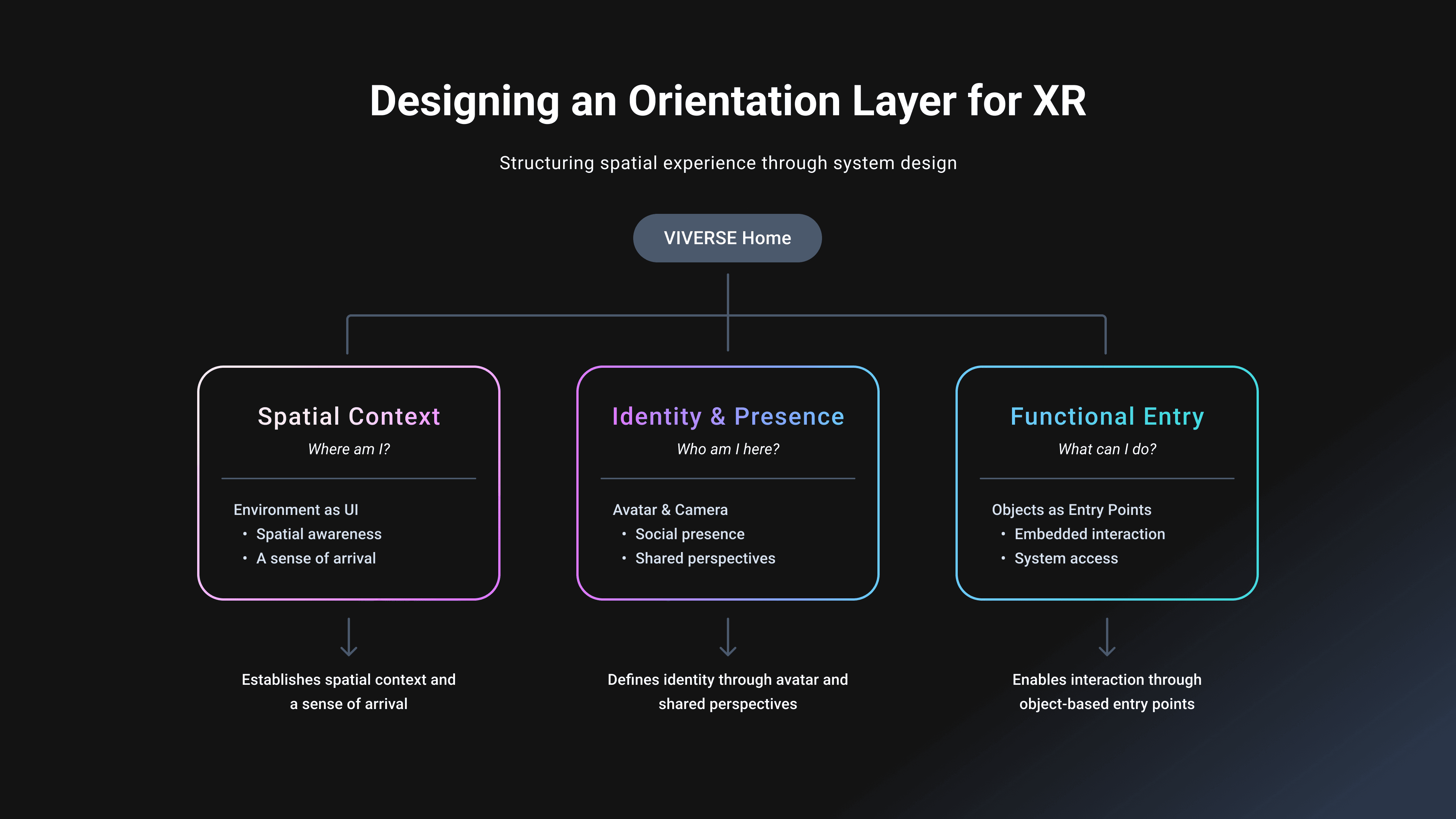
User Orientation Model — structuring user understanding, identity, and action
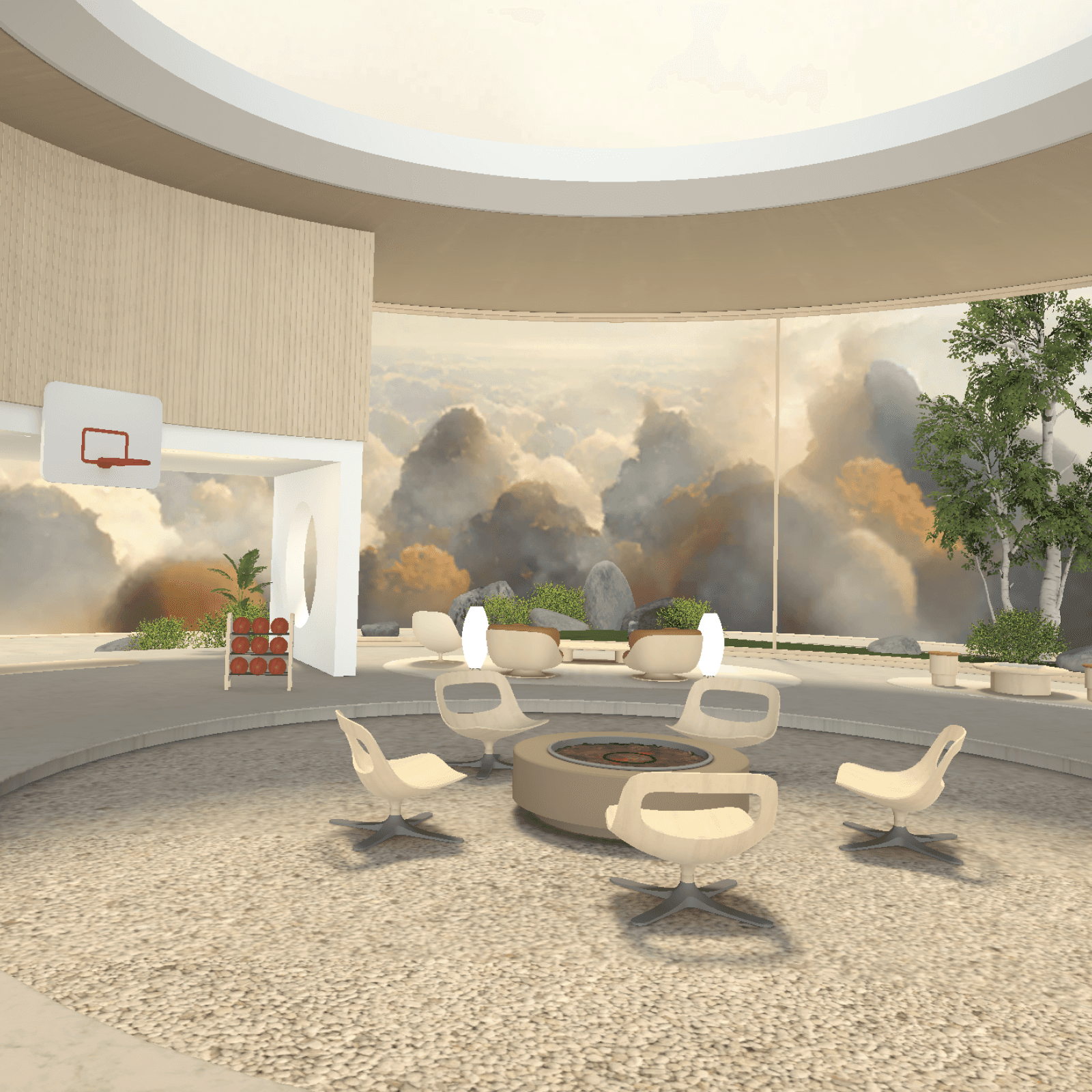
Spatial context establishes a clear sense of arrival
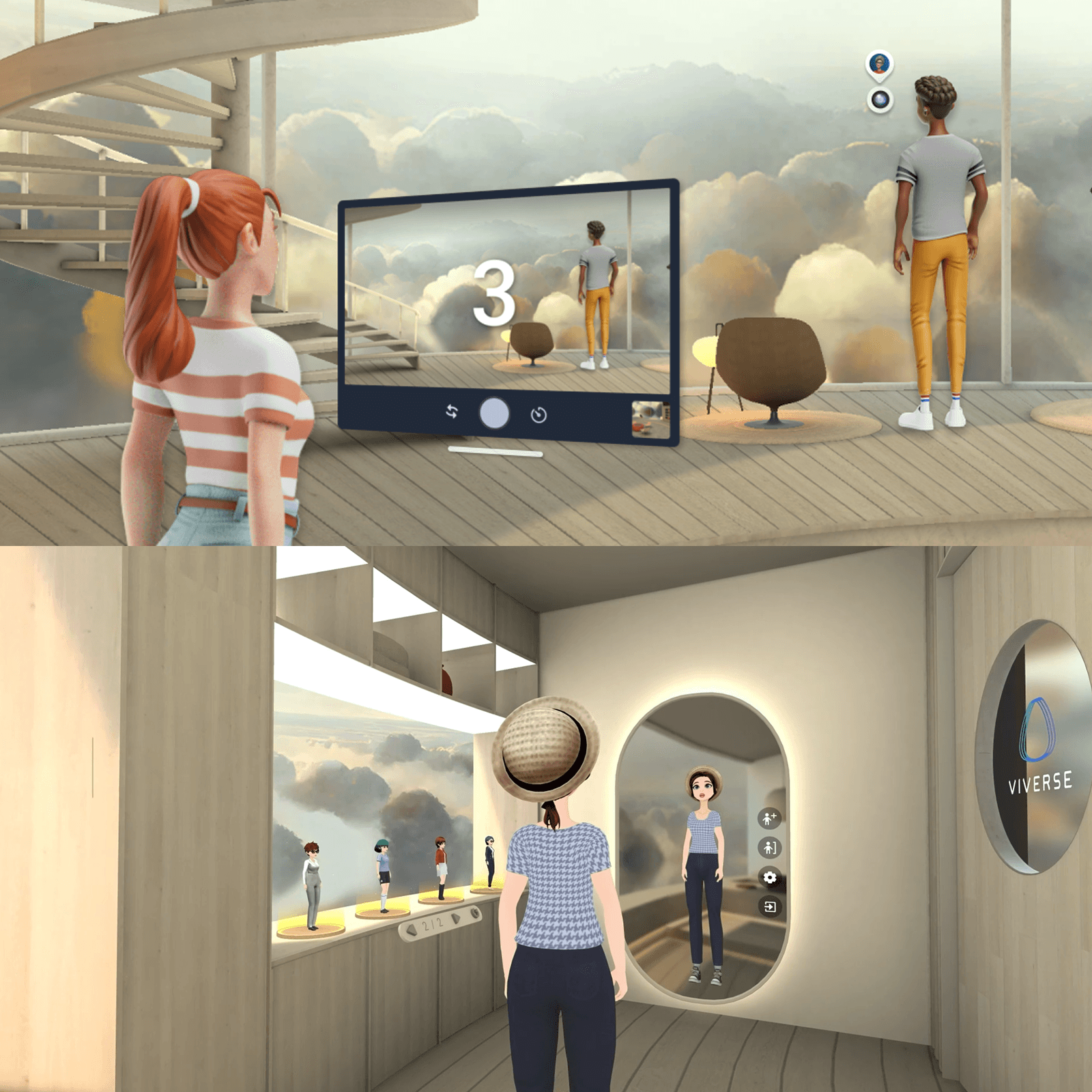
Identity is defined through avatar and shared perspectives
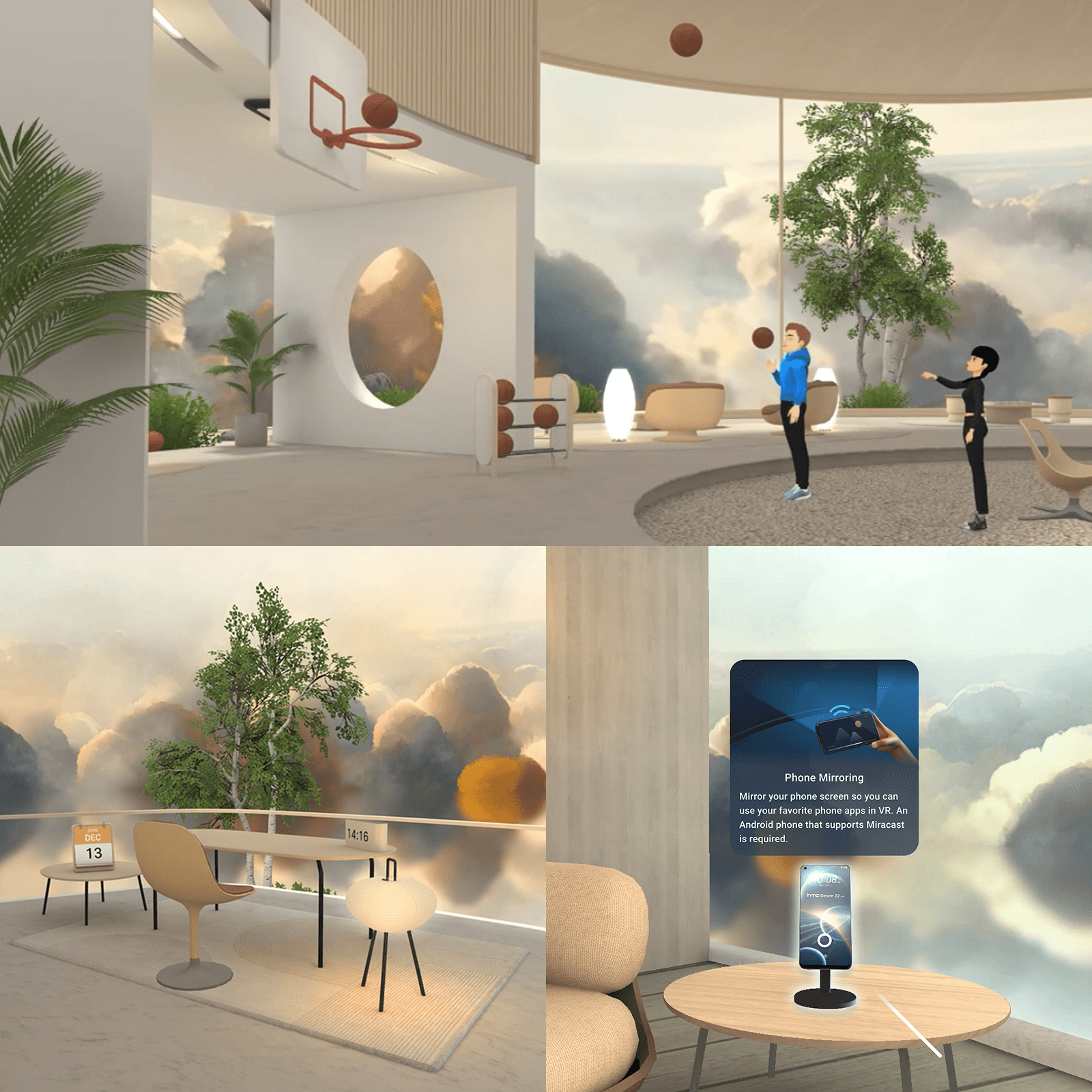
Interaction is enabled through object-based entry points
Home was not designed as a feature, but as a system that shapes how users navigate and understand the environment.
Phase 3 — Aligning a Fragmented Platform Through System Thinking (WebXR & Platform Services)
Context / Situation
As VIVERSE expanded into WebXR and platform services, speed and flexibility became priorities. However, rapid delivery across different teams led to growing inconsistency in visual language, interaction patterns, and system logic.
What we focused on
Rather than redesigning everything, the focus was on alignment:
Introducing shared system rules and design foundations
Applying Omni principles where appropriate
Supporting both in-world experiences and platform services (search, rewards, subscriptions, notifications)
Decision focus
When iteration speed increases, system alignment becomes more critical than ad-hoc fixes.
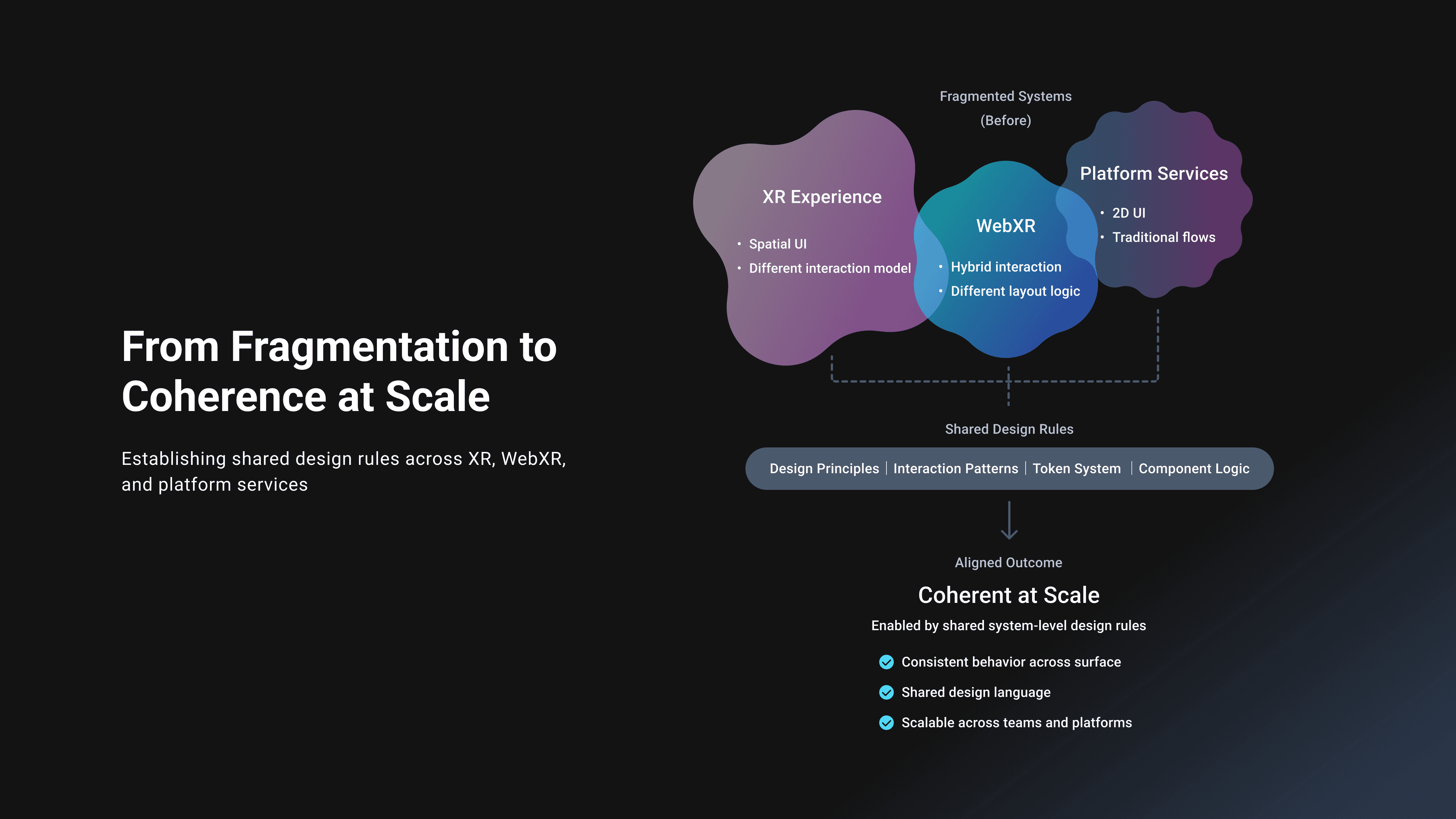
Aligning fragmented systems through shared design principles and interaction logic
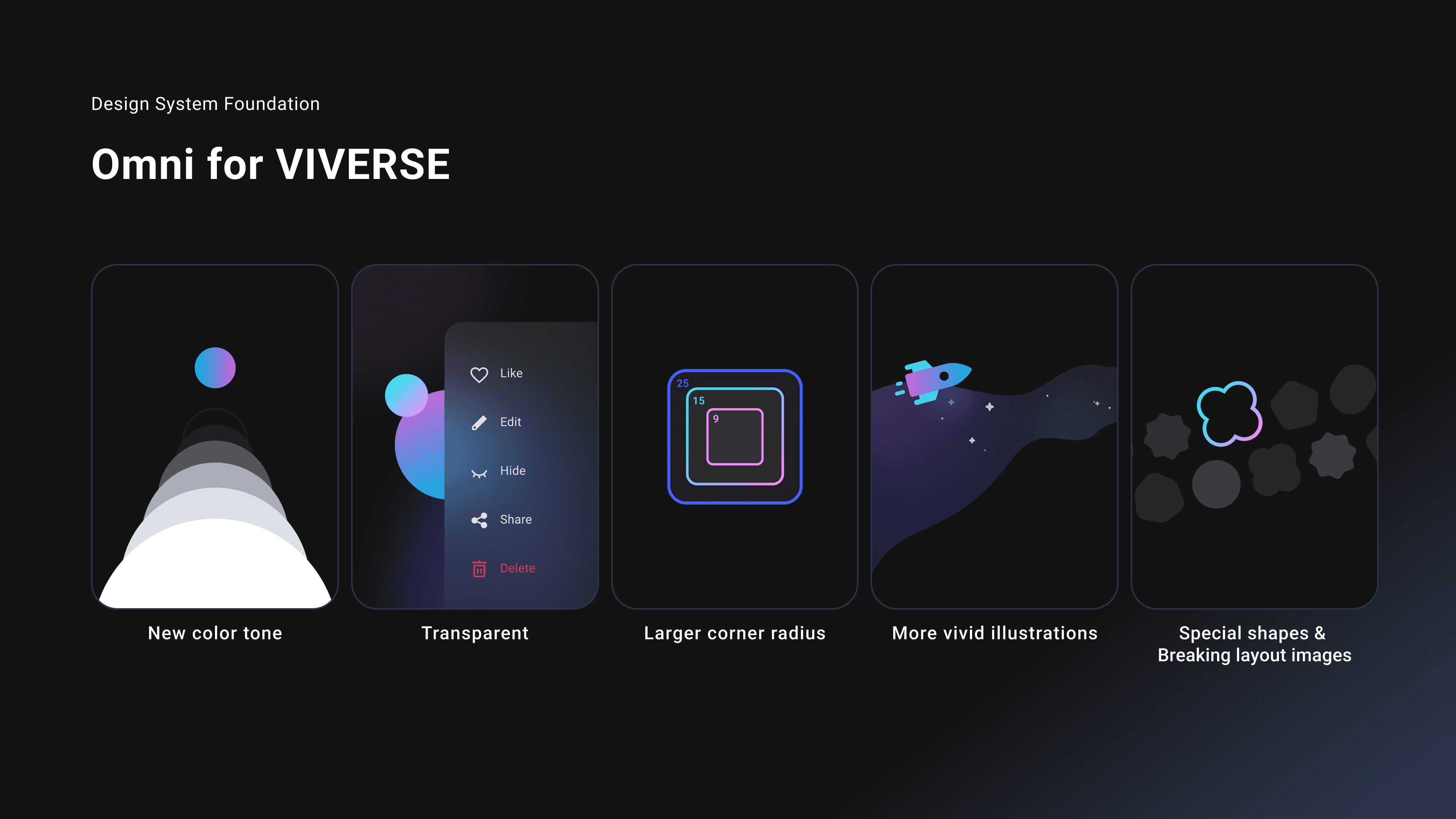
These shared principles were translated into a unified design language—extending Omni to support VIVERSE’s evolving needs across immersive and 2D surfaces
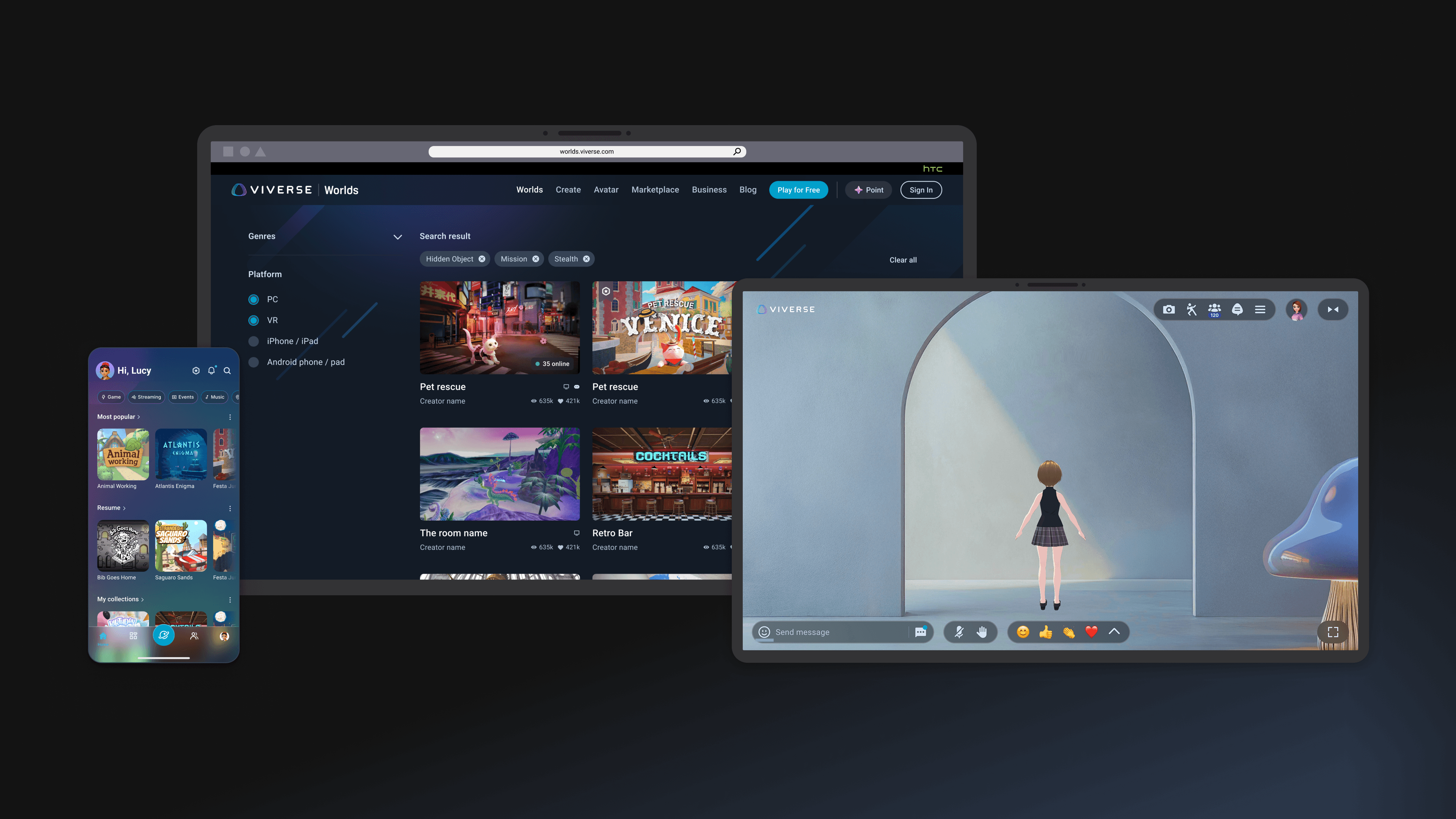
The system enabled consistent experiences across immersive environments and platform services—supporting discovery, interaction, and engagement without fragmentation
The goal was not uniformity, but coherence—enabling different surfaces to evolve without fragmenting the experience.
Phase 4 — Expanding Access Without Fragmenting Experience (WebXR & Mobile)
Context / Situation
With WebXR and mobile becoming key entry points, VIVERSE no longer depended on XR hardware alone. The challenge shifted from immersion-only thinking to maintaining continuity across devices.
What we focused on
We focused on expanding access across devices while maintaining a coherent sense of identity and experience.
Rather than treating each platform as a separate product, we aligned how users enter, express, and engage with the system—ensuring continuity across XR, WebXR, and mobile contexts.
This also extended into AI-assisted creation workflows, enabling scalable content generation while maintaining a consistent experience across surfaces.
Decision focus
Expand access across devices without fragmenting identity or experience.
Expanding access while preserving identity and experience
Identity remains consistent across devices, preserving user presence beyond a single surface
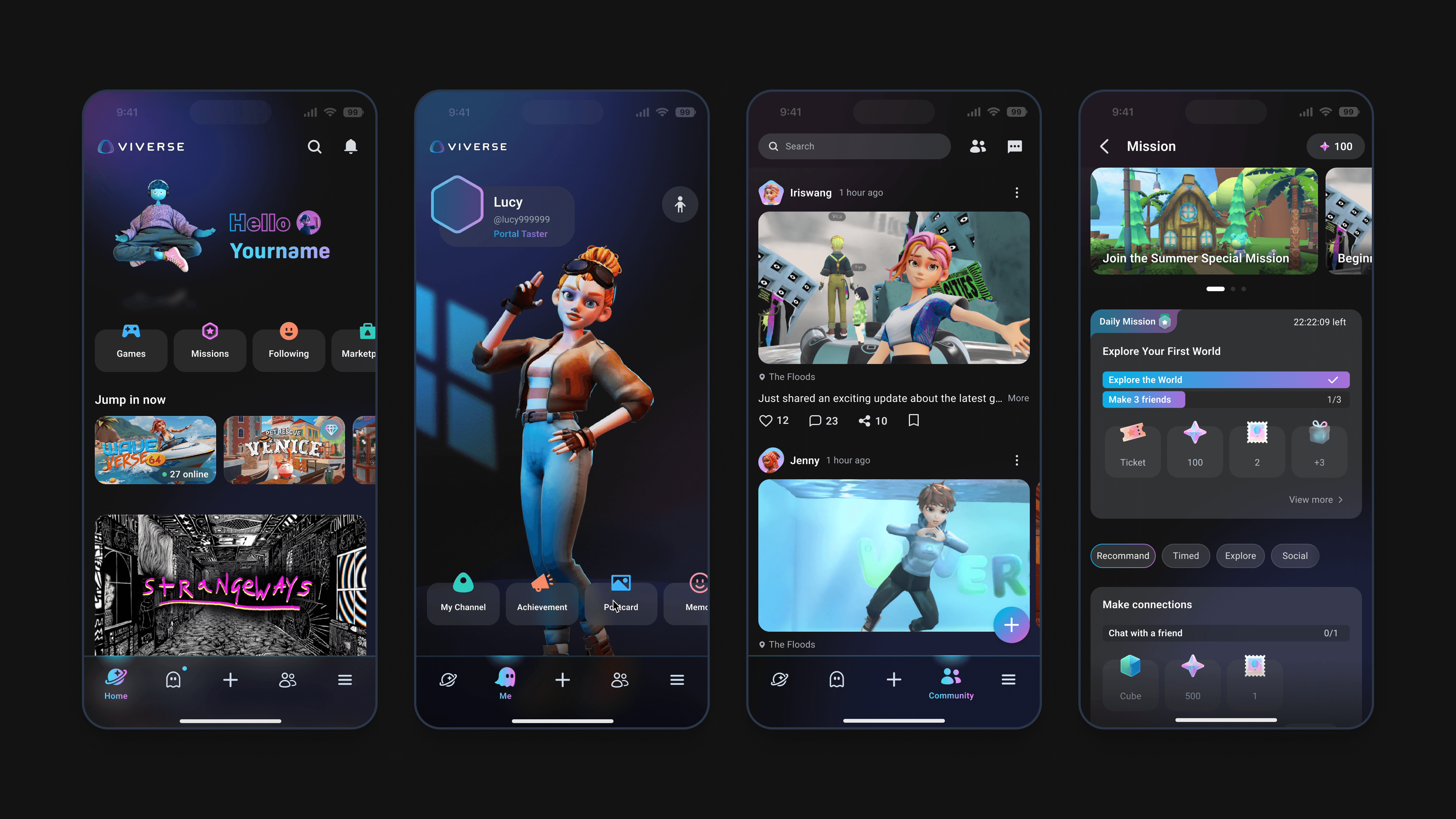
Mobile extends access to immersive content, enabling continuity in everyday contexts
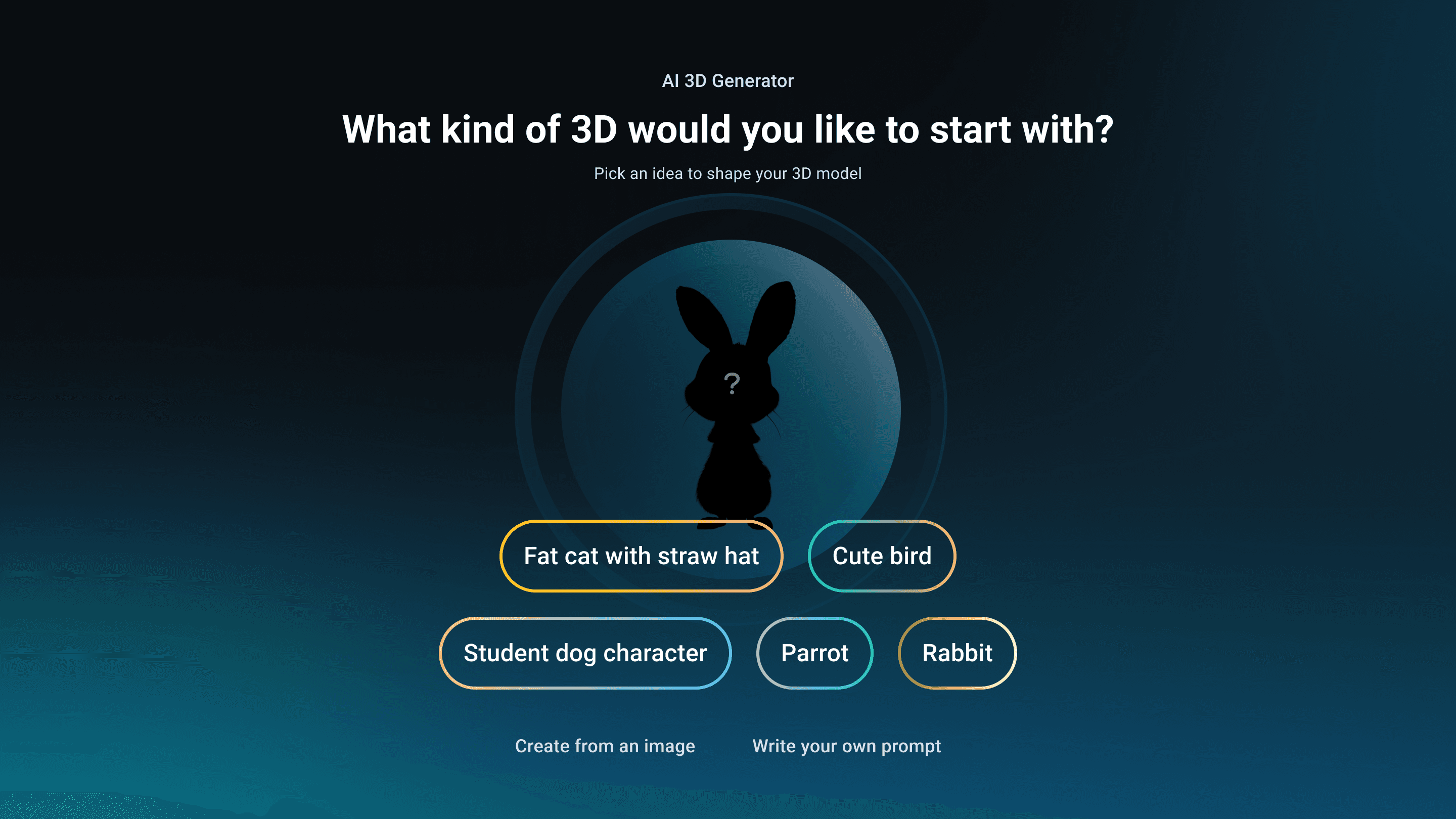
AI-assisted creation lowers the barrier to content generation while maintaining system coherence
Expanding access was not about adding more entry points, but about preserving a coherent experience as the platform scaled.
Outcome & Impact
System coherence
Established shared design foundations that enabled consistent decision-making across products and regions — reducing divergence as the ecosystem scaled.
Collaboration at scale
Reduced duplicated design efforts and alignment overhead, enabling faster iteration and more consistent cross-product experiences.
Durable foundations
Defined core design principles that supported multiple product directions — allowing teams to evolve without redefining fundamental patterns.
Strategic resilience
Built a system architecture that could adapt to shifting product strategies — maintaining coherence even as direction changed.
Reflection
When direction keeps changing, strong systems are defined by what remains stable.
Instead of reacting to every shift, I focused on identifying the experience logic and design principles that could support multiple futures.
This meant designing for decisions that would remain valid as the platform evolved.
In complex ecosystems, the most valuable contribution is often not a feature — but a structure that allows teams to move forward with clarity and confidence.